

It’s always nice to discover a connection (albeit a little tenuous!) between your favourite author and your hometown. Today I want to share with you the story of Middleton Hall, just outside of Tamworth, Staffordshire, and it’s fascinating seventeenth- and eighteenth-century owners, who were related to one Miss Jane Austen…
In the beginning…
The land at Middleton Hall was first mentioned to be the home of Palli and Thurgot in the Domesday Book – so it has been a home for around a millennium. Not long afterwards – the Domesday Book was completed for William the Conqueror in 1086 – Middleton was given to a Norman Lord of the name Hugh de Grandmesnil, who fought for William at the Battle of Hastings in 1066.

After Grandmesnil, Middleton was passed to the de Marmions in 1190. The name Marmion is key around Tamworth and the Midlands: you’ll find that they were once seated at Tamworth Castle, and also that they are – further down the family line – related to the Ferrers family of Baddesley Clinton, near Solihull.
The de Marmions were Standard Bearers of England and held Middleton until the late thirteenth century. In 1291, the final de Marmion Lord died, passing it to his widow, who lived there until 1313.
Upon her death, it was split between her husband’s three co-heirs, with the estate then being inherited in three different parcels effectively until in 1493, Sir Henry Willoughby inherited two-thirds from his grandmother Lady Margaret de Freville, and bought the final third two years later.
The tenure of the Willoughbys
The estate firmly remained in the Willoughby family for about five centuries, but it was not without drama.

Francis Willughby (1635-1672) – who, for some reason, chose to spell his surname as Willughby, discounting an ‘o’ – was a gifted naturalist who collaborated with John Ray, who also tutored Francis’s three children that he had with his wife Emma Barnard.

But, when Francis died, Emma later remarried Sir Josiah Child.
Child was an economist and a governor of the East India Company who did not have the same regard for education that Francis had: Ray was dismissed, and Francis and Emma’s eldest son, Francis Willoughby (1668-1688) went to St Catharine’s College Cambridge. Francis, in an effort to get his younger brother Thomas (1672-1729) out from under the control of Child, arranged for him to join him in his studies there in 1685.
Child had enacted Emma’s dower rights upon Middleton Hall – as the widow of the first husband, Francis Willughby – which meant he could refuse her three children with Francis access to it and the collections inside.
This meant it no longer became the principal family home, and Francis, Thomas and their sister Cassandra (1670-1735) were the last Willoughby children born there.
Francis began a legal battle against his stepfather to get it back, and took over the family property of Wollaton Hall in Nottingham, inviting his sister Cassandra to act as mistress there as they renovated the property, which had been damaged in wartime.

Wollaton Hall now serves as a venue, as well as Nottingham’s Natural History Museum, or, perhaps most famously, as Batman’s Wayne Manor in The Dark Night Rises (2012).
Cassandra Willoughby & Georgian Middleton
What did this mean for Cassandra? Well, actually quite a lot of freedom. She was out from under the thumb of her stepfather and began running the house and assisting with the renovations led by her brother. Cassandra was a talented painter, as well as engaging with paper cutting and music, but was also incredibly drawn to the legacy of her naturalist father.
After Francis succumbed to illness and passed away in 1688, Cassandra and Thomas brought their father’s collections and writings to Wollaton and set about cataloguing. Cassandra later published some of the archival material, as well as a journal of her travels around England. She also wrote a Willoughby family history.
They were talented siblings: Thomas inherited their father’s love of botany, and was elected a fellow of the Royal Society in 1693. He later pursued politics and became Lord Middleton in 1712, as well as completing the restoration of Wollaton Hall begun by his elder brother.
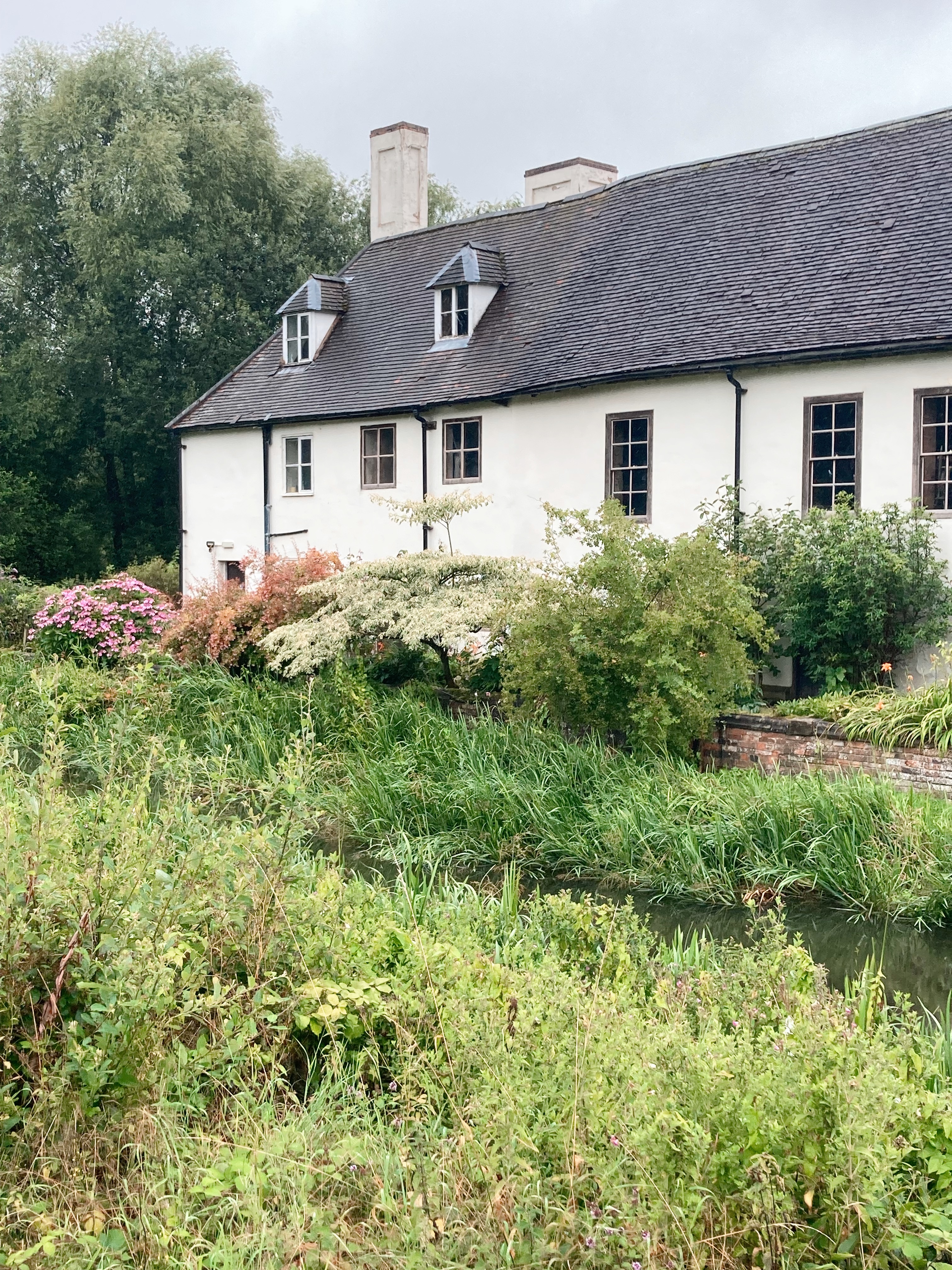
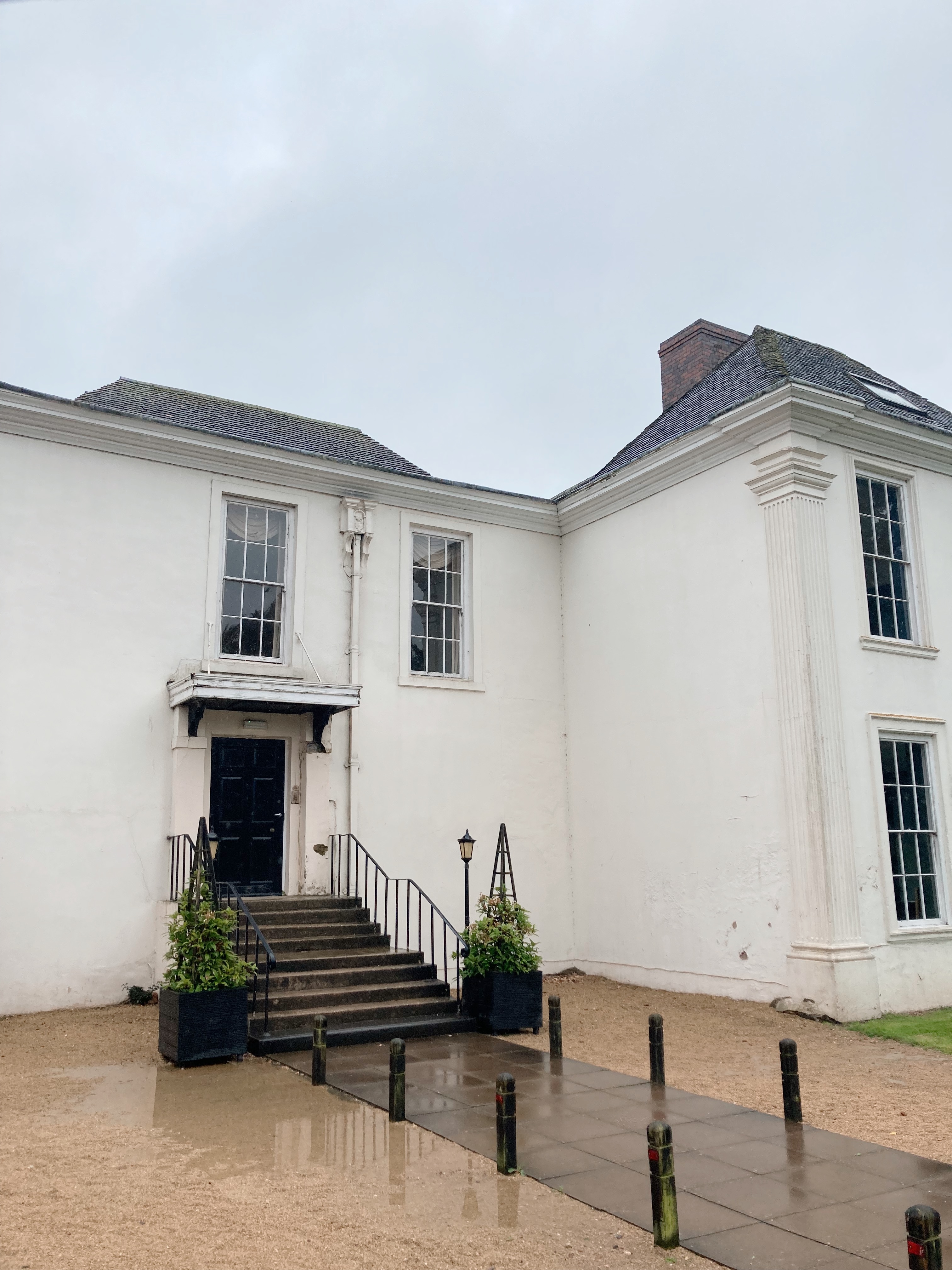
Significantly for Middleton Hall, he began its Georgian renovation, which completely transformed the building. Middleton Hall is astonishing, with the design seemingly flitting between older English timber frame and the lightness of Georgian architecture. The Georgian section of Middleton was completed three decades after his death.
Ancestors of the Austens
Now, I teased a Jane Austen connection at the beginning of this story… and here is where we get to it.
Cassandra Willoughby did not marry until quite late in life – probably because she enjoyed great independence at Wollaton. Aged forty-three, on August 4th 1713, she married James Brydges, who, in 1719, became the 1st Duke of Chandos, and she his Duchess.
James’s sister Mary was the great grandmother of Jane Austen, and Cassandra spent so much time with that side of the family before her death that her memory – and aristocratic connection – was kept alive in both Jane Austen’s mother and beloved sister, who were both named Cassandra.
Not only this, but the Willoughby family gave their names to Austen’s characters: perhaps most famously, the dastardly John Willoughby in Sense and Sensibility.
You can visit Middleton Hall on various days throughout the year – check their website here – as well as picnic in their grounds. I was lucky enough to see one of my closest friends get married there recently, and it really is a beautiful, special place.


 Dr. Lizzie Rogers

Leave a comment