
We talk a lot about rich men during the Regency period, but what about the heiresses of the day?
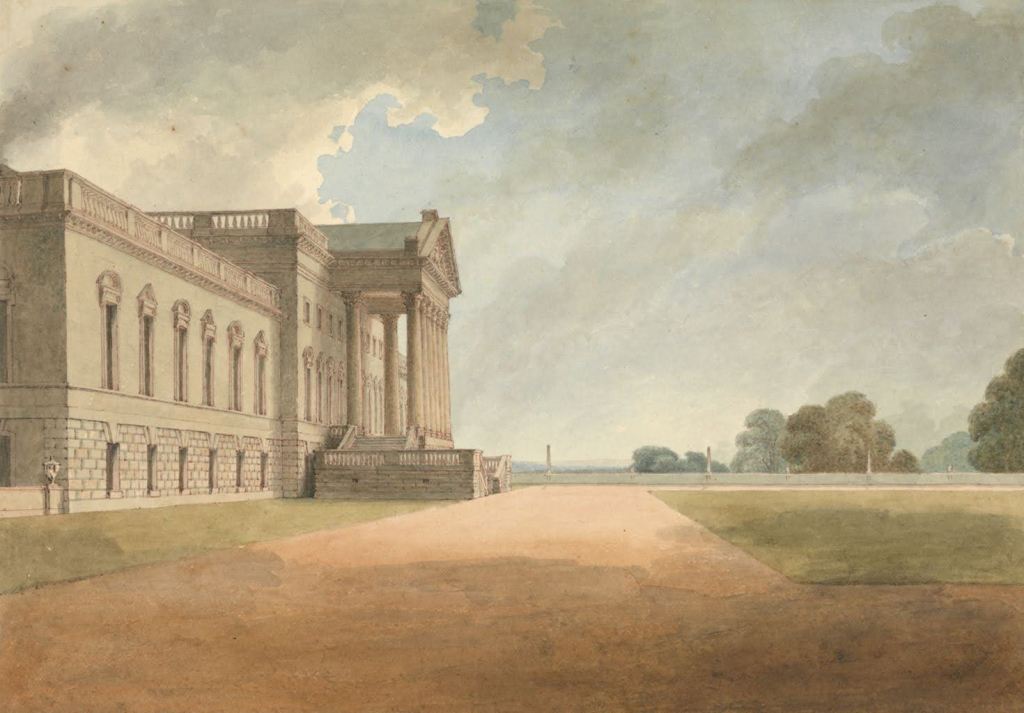
One of the richest heiresses in the early nineteenth century was Catherine Tylney-Long, heiress to Wanstead Park in Essex, as well as lands in Hampshire and Wiltshire, who actually had quite a tragic story.
It did not begin tragically.
Catherine’s father, Sir James Tylney-Long, named his daughter coheir with her brother. However, when Catherine’s brother died in 1805, fifteen-year-old Catherine became the sole heir to a vast fortune, country houses and lands that yielded an income of £40,000 a year.

To put this number into perspective, we can think back to Pride and Prejudice’s Mr Darcy: his income of £10,000 a year was deemed absolutely astonishing.
Putting it simply, Catherine was eye-wateringly rich: she became known as the Wiltshire Heiress.
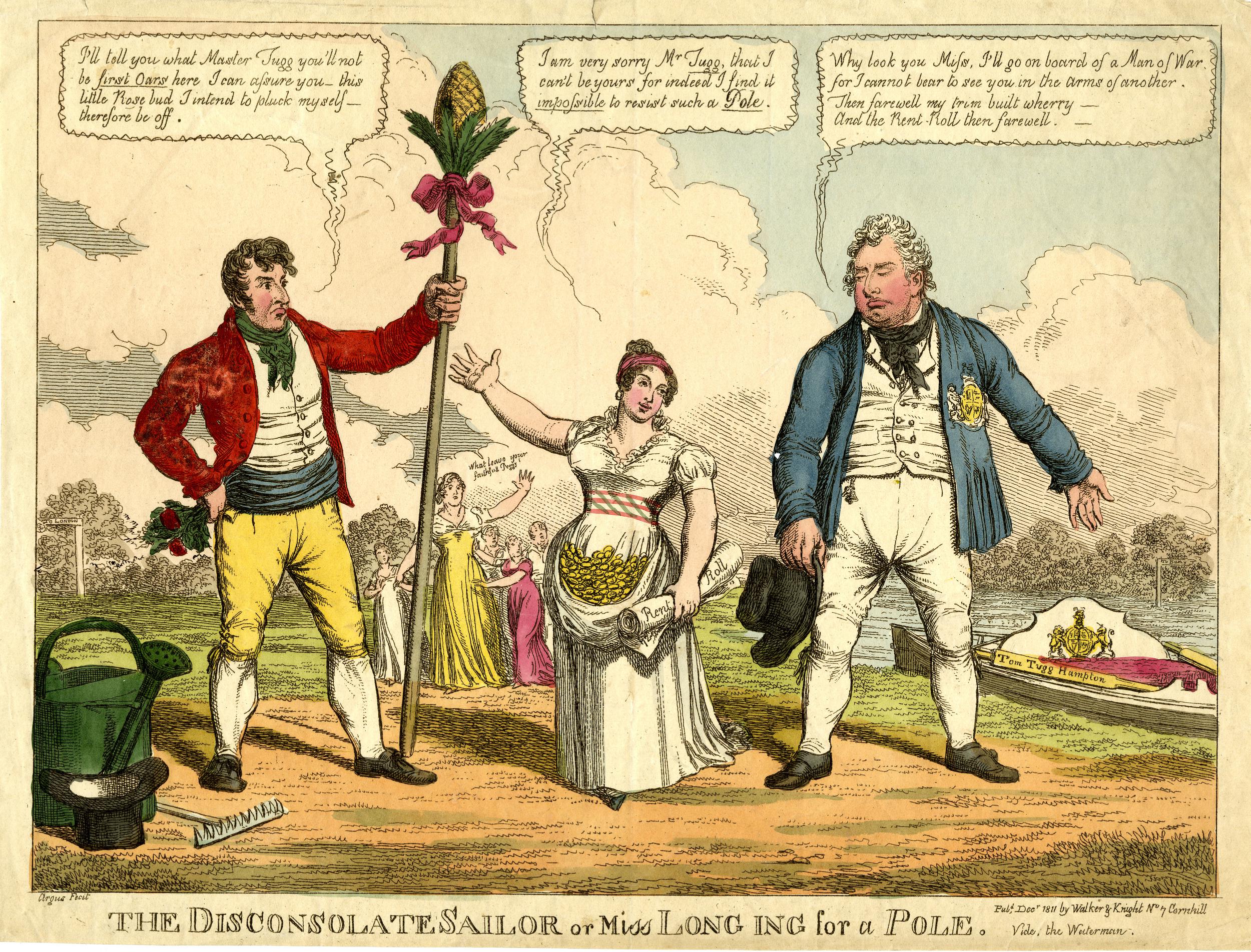
This wealth became famous, and of course, fortune hunting men came after her. The pursuit of Catherine by various men was so renowned that it entered nineteenth century satire, with satirical prints mocking her suitors.
The suitors included men as high up in British society as the Duke of Clarence and St Andrews, the future William IV. He had great debts and saw Catherine’s fortune as the key to absolving them. Catherine reportedly wouldn’t marry him because she thought he was too ugly.
Catherine ended up falling in love with William Wesley Pole, the 4th Earl of Mornington and the nephew of the Duke of Wellington. He was supposed to be very handsome and charming, and they married in March 1812.
He took Catherine’s surnames in addition to his own, becoming William Pole-Tylney-Long-Wellesley (quite the mouthful).
William ended up being a complete cad who had affairs left, right and centre, and who tried to turn their children against his wife. Catherine hinted in her letters that William gave her a venereal disease, and he racked up great debts everywhere he went.
In 1822, to avoid being imprisoned for said debts, he got a position with King George IV, before, a year later, abandoning Catherine completely for continental Europe, where he took up with a different mistress.
Catherine, left behind by her horrible husband, died in 1825, at only 35 years old. Her children went into the care of her two unmarried sisters, and William demolished her family home of Wanstead House to pay for his debts.
The tragedy of her death was even referenced in her obituary, published in the Observer on September 18th 1825. It read:
“With a fortune that made her an object and a prize to Princes, this amiable woman gave her hand and heart to the man of her choice, and with them all that unbounded wealth could bestow. What her fate has been, all the world knows: what it ought to have been, the world is equally aware. To her, riches have been worse than poverty; and her life seems to have been sacrificed, and her heart ultimately broken, through the very means which should have cherished and maintained her in the happiness and splendour which her fortune and disposition were alike qualified to produce. Let her fate be a warning to all of her sex, who, blessed with affluence, think the buzzing throng around which surround them have hearts.”
It was a sad end to a woman put in quite a unique position, and who pursued her heart in choosing a husband.


 Dr. Lizzie Rogers
Leave a comment