

One of my favourite things to read about in eighteenth and nineteenth century history is how, and where, people spent their free time.
The eighteenth century saw a real change in the development of leisure and pleasure, especially for the elite, which meant the arrival of more cultural institutions and places to satisfy these needs.
One such place was the development of pleasure gardens.
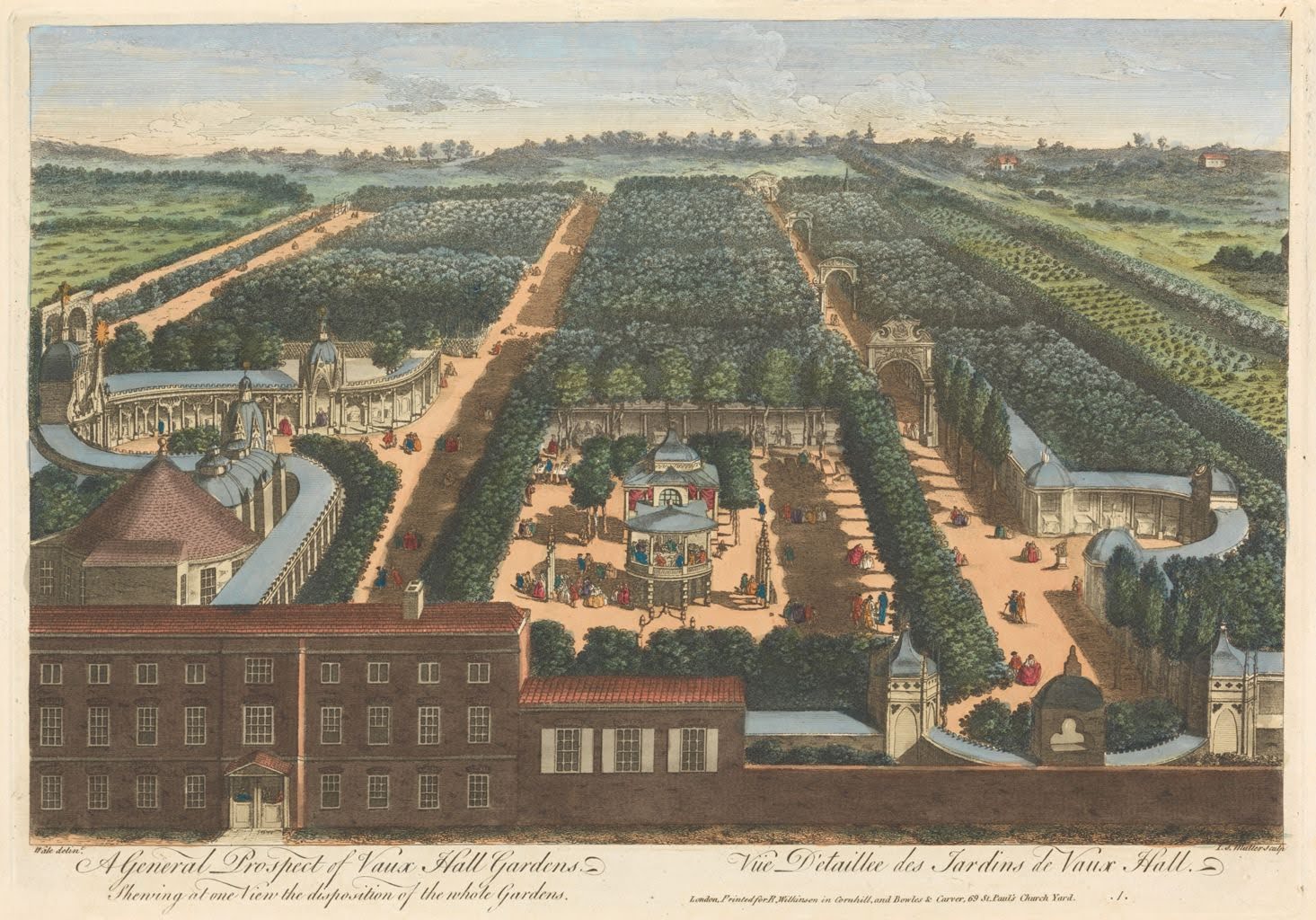
Pleasure gardens were formal gardens including fashionable buildings created to hold music, dancing, food and drink, fireworks, theatre performances, masquerades and light shows.
Perhaps the most famous was Vauxhall Pleasure Gardens. Vauxhall was established by Jonathan Tyers in 1729 and operated for 130 years, with Tyers believing the ticketed entry would keep the lower classes out.
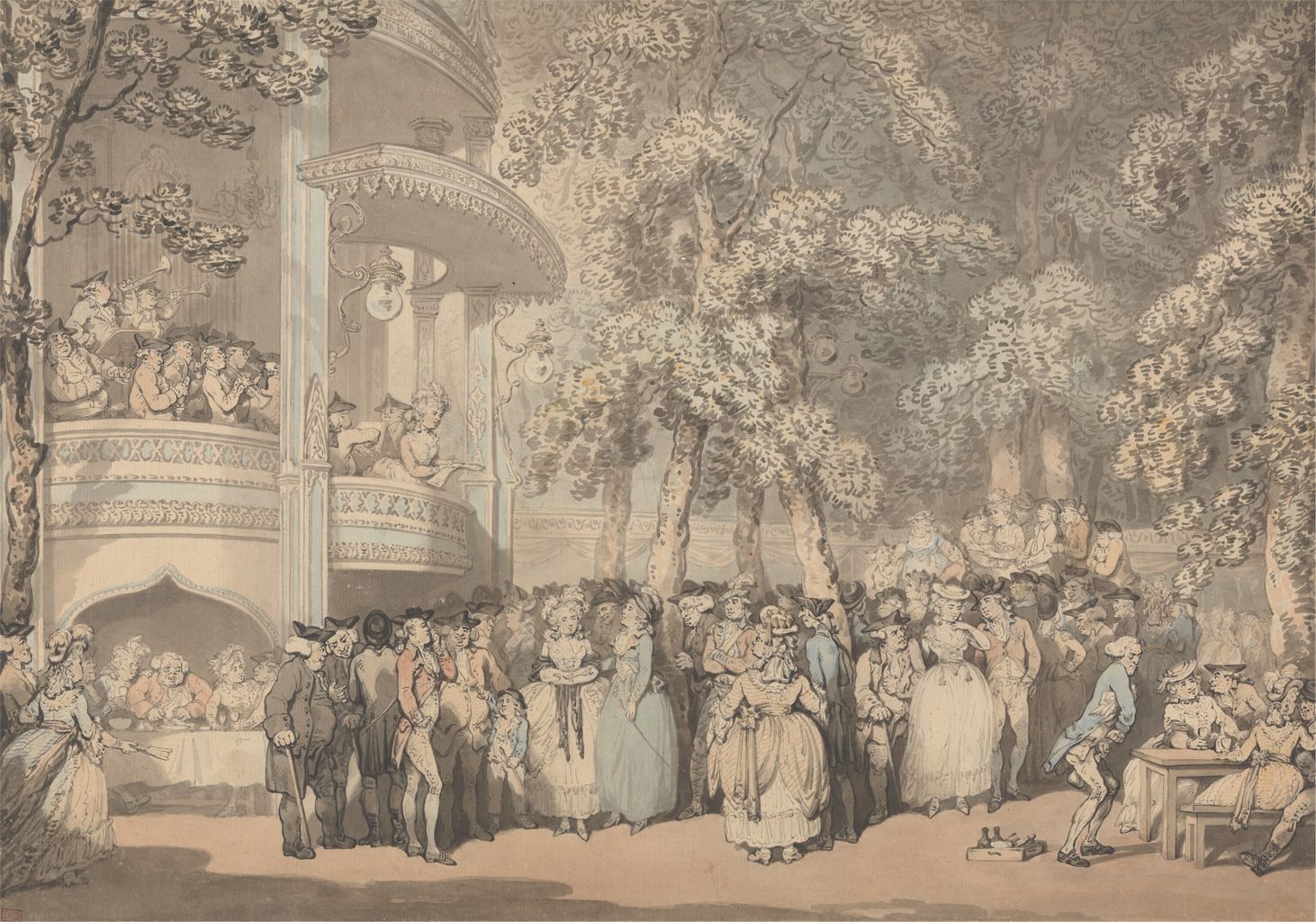
You could find plenty of art and culture on display there: paintings by artists such as William Hogarth on display, and Handel playing music in the two decades after it opened, and it was visited by famed names of the period including Casanova.
However, despite tickets being an idea to elevate what happened there, many affairs and secret dalliances happened in shady spots around the garden, and it did not prevent well-dressed prostitutes from attending either.
By the Regency period, it was a place of showing wealth, fashion and excess, with some events even patronised by the Prince Regent.
Learn more about entertainment at Vauxhall in my reel here:

 Dr. Lizzie Rogers
Leave a comment