

Print made by James Caldwall, The Cotillion Dance, 1771, Yale Center for British Art, Paul Mellon Collection, B1977.14.11242.
If you were part of high society in late eighteenth or early nineteenth century London, a key social location of the season was Almack’s.
Located on King Street behind St James’s Square, Almack’s put on balls and suppers weekly for three months during the London season.
It was founded in the 1760s by William Macall – switch the two syllables of his surname around, and you get the name Almack’s (imaginative) – and was one of the first clubs in the capital to allow both men and women to enter.
This meant that, though it grew a reputation for being stuffy, it became a key location for mothers and guardians to take their daughters to look for prospective husbands.
Almack’s was governed by some serious rules, which were overseen by its seven patronesses. During the Regency period, the patronesses were led by Sarah Villiers, Countess of Jersey, a member of the banking family who owned Osterley Park, with the other six being Amelia Stewart, Viscountess Castlereagh; Clementina Drummond Burrell; Emily Clavering-Cowper, later Viscountess Palmerston; Dorothea, Princess Lieven; Maria, Countess of Sefton; and Maria Theresia, Princess Esterhazy.
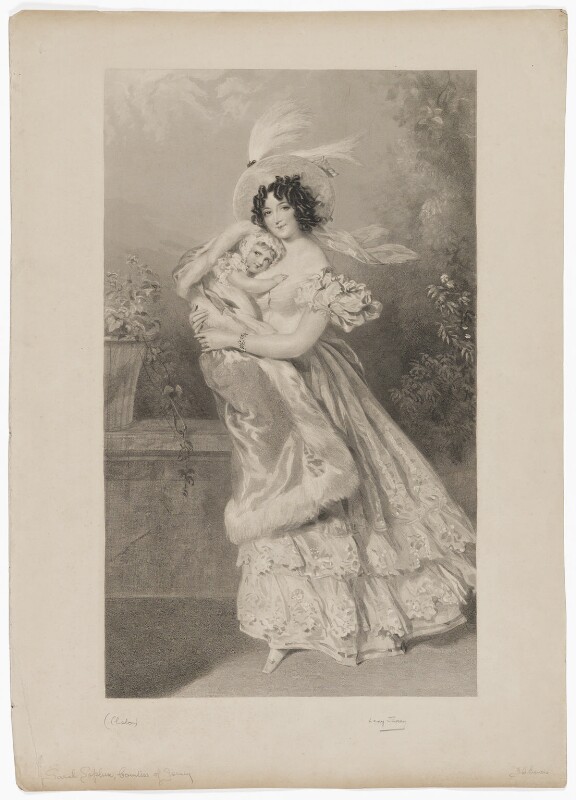
The seven patronesses dictated who would be allowed a voucher to enter.

They took their immense power seriously, and wielded it with iron fists. For instance, Lady Jersey once barred Lady Caroline Lamb after she satirised Lady Jersey in her novel Glenarvon, although the bar was eventually lifted thanks to the mediation of Viscountess Castlereagh.
The patronesses would also decree which dances were allowed to be performed during the balls. At the beginning of the Regency, only country dances were allowed, with strict distances between partners.
No alcohol was allowed to be consumed there, and there was a strict no-admission policy if you arrived later than 11pm, as well as a dress code that had to be followed.
This extended to everybody: even important people, like the Duke of Wellington. In May 1819, he arrived at the door with his voucher and was turned away for wearing full-length trousers, bucking the male dress code of knee breeches and silk stockings.
The patronesses were ridiculed for this decision in the press, but still, their power stood strong as they reigned over this important place in the London society marriage market.

 Dr. Lizzie Rogers
Leave a comment