

Humphry Repton, North Parade, Bath, 1784, Yale Center for British Art, Paul Mellon Collection, B1986.29.460.
Bath, a Georgian city that was descended upon during the eighteenth century for its fashionable surroundings, for its healing waters and its vibrant social scene, had many famous residents during its historical heyday.
However, as the eighteenth century became the nineteenth, perhaps its most famous resident – famous to us now, in retrospect, but not at the time – was a Miss Jane Austen.
Jane Austen is sometimes seen as synonymous with Bath. Substantial parts of two of her novels (Northanger Abbey and Persuasion) take place there, she both visited and lived there, and, today, she is celebrated every September with the Jane Austen Festival, and all year round by the Jane Austen Centre at 40 Gay Street, just a few doors down from where Austen herself once stayed.

What is in the pages of Northanger Abbey and Persuasion might be seen as reflective as some of Austen’s experiences in the city, which were a mixture of fun and happiness, along with perhaps a few of the lowest moments of her life.
Northanger Abbey follows seventeen-year-old Catherine Morland to Bath from her home in rural Wiltshire with family friends. Northanger Abbey to me is very much a coming-of-age novel, with Catherine an enthusiastic and excitable young woman thrown into adventure and romance.
She is the quintessential small town girl heading to the big city: everything is new and thrilling.
They arrived at Bath. Catherine was all eager delight—her eyes were here, there, everywhere, as they approached its fine and striking environs, and afterwards drove through those streets which conducted them to the hotel. She was come to be happy, and she felt happy already.”
Northanger Abbey, Chapter II.
Austen herself first visited Bath (as far as we know) at the end of 1797 with her mother and sister, where they stayed with her mother’s family, the Leigh-Perrots, at No.1 Paragon Buildings. Austen would have been a little older than Catherine – twenty-one, almost twenty-two – but she must have felt the contrast to the small Hampshire village of Steventon, where she grew up.
Bath had been founded by the Romans in 1st century CE as a thermal spa town, and this became its central importance again during the eighteenth century.

Businessman Ralph Allen, architect John Wood and lawyer (and eventual Master of Ceremonies) Beau Nash were at the helm of transforming the city into what we recognise it for today: a neoclassical city full of beautiful honey-coloured stone buildings, landscape parks and spa facilities.
It tapped into a rising awareness of the benefits of and desire for travel for health purposes, with resort towns becoming important stops on many travel itineraries for the rich, particularly on the Grand Tour. The social and cultural ambition of Allen, Wood and Nash made Bath a hotspot in Somerset, and a model for spa towns across Europe.
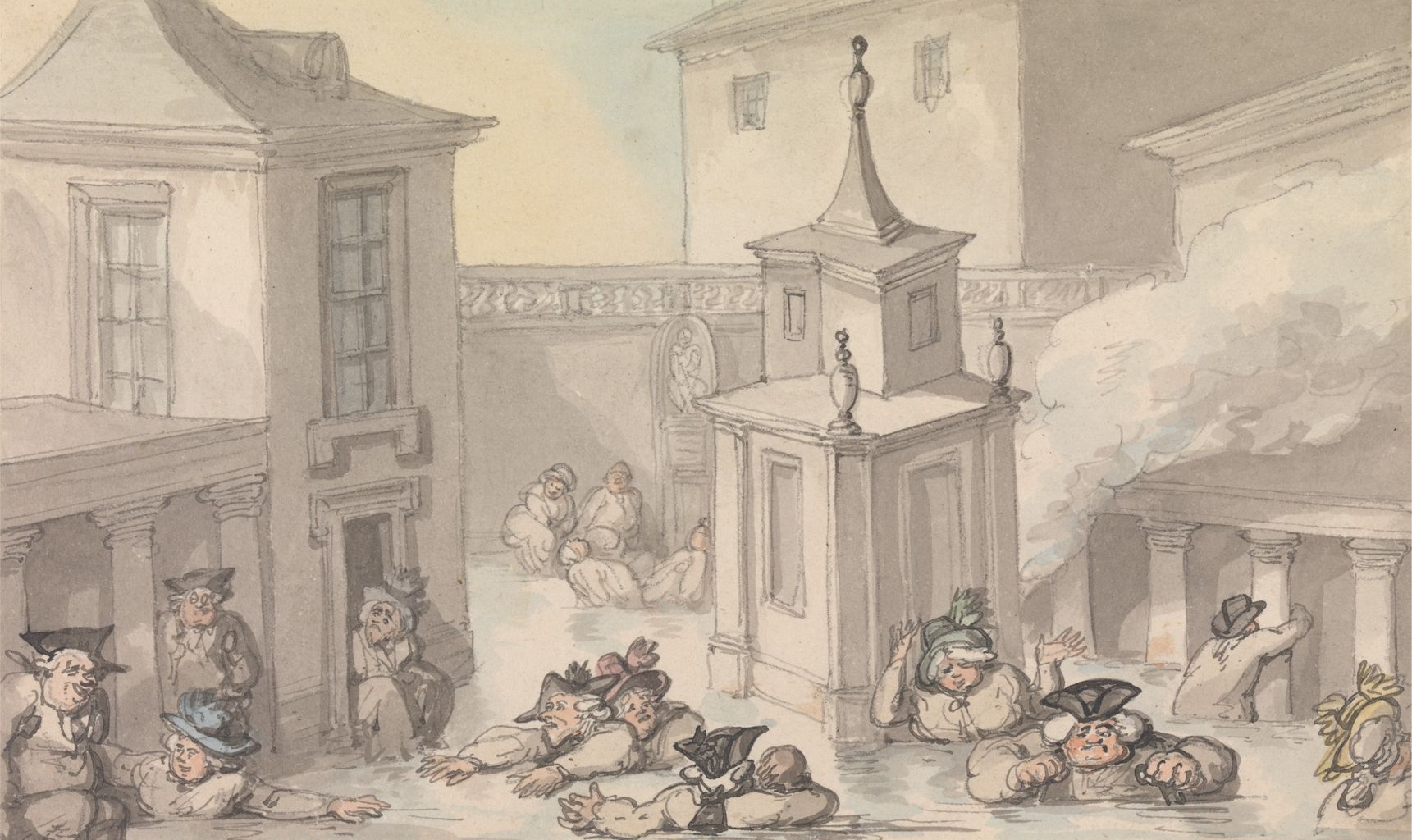
By the time Jane Austen was visiting the city, its heyday had passed, but it was still a popular place to go, even if many people preferred to seek the society of London.
Bath was still recommended for health, for society and culture, and was a good place for people to meet, as Austen herself notes in the opening chapter of Northanger Abbey, when the Allens decide to invite Catherine on their excursion:
But when a young lady is to be a heroine, the perverseness of forty surrounding families cannot prevent her. Something must and will happen to throw a hero in her way.
Mr. Allen, who owned the chief of the property about Fullerton, the village in Wiltshire where the Morlands lived, was ordered to Bath for the benefit of a gouty constitution—and his lady, a good-humoured woman, fond of Miss Morland, and probably aware that if adventures will not befall a young lady in her own village, she must seek them abroad, invited her to go with them. Mr. and Mrs. Morland were all compliance, and Catherine all happiness.
Northanger Abbey, Chapter I.
Austen visited a second time in 1799, accompanying her brother Edward and his wife Elizabeth as he sought the water to improve his health. At 13 Queen Square, Austen enjoyed a vibrant summer of activity, writing to her sister Cassandra on June 2nd 1799:
There is to be a grand gala on tuesday evening in Sydney Gardens; – a Concert, with Illuminations & fireworks; – to the latter Eliz: & I look forward with pleasure, & even the Concert will have more than its’ usual charm with me, as the Gardens are large enough for me to get pretty well beyond the reach of its sound.
Sydney Gardens remains a beautiful park in the city behind the Holburne Museum (which you might recognise as Lady Danbury’s house in Bridgerton).
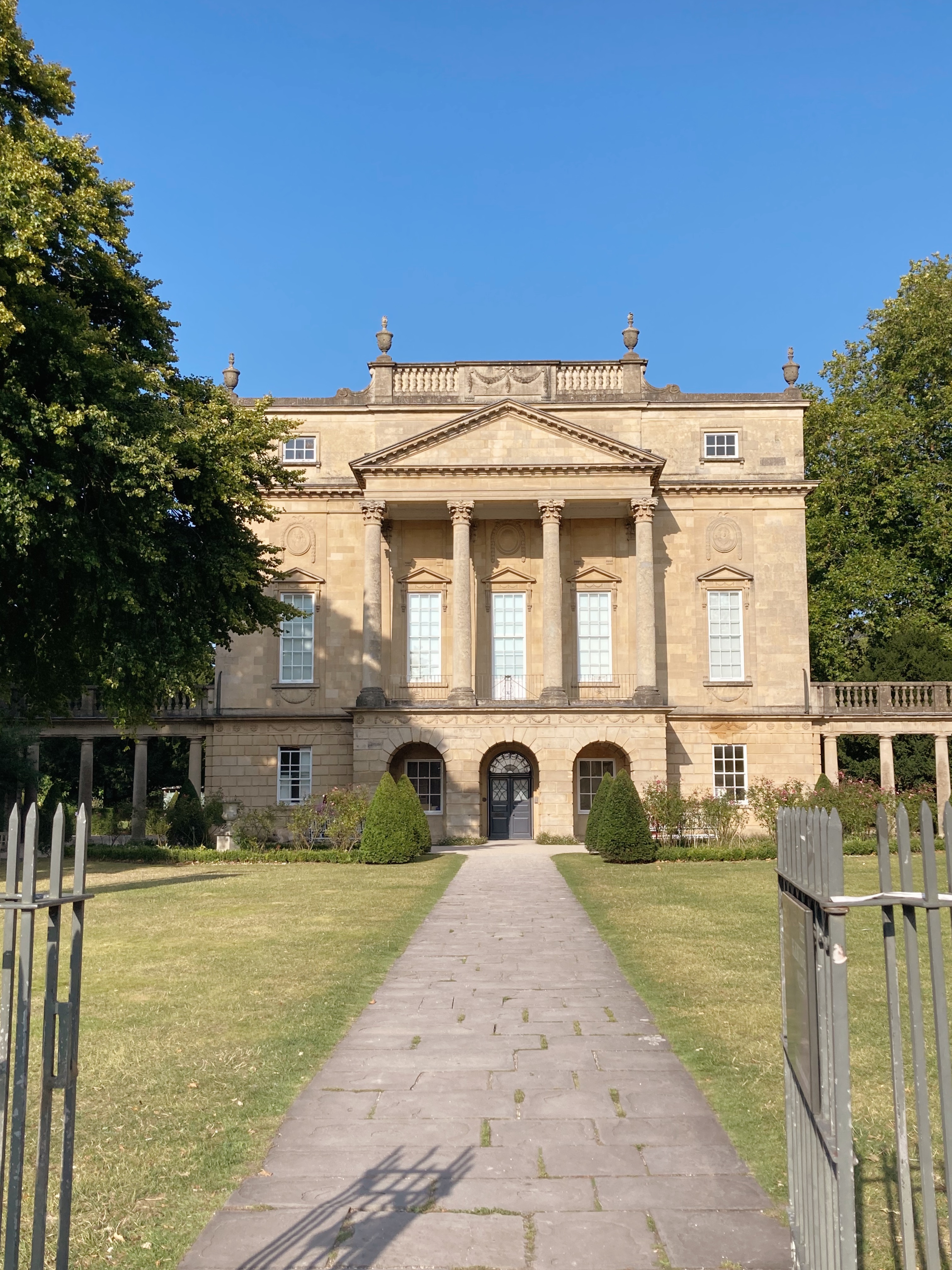
What is unique about Sydney Gardens – which were first laid out in the 1790s, so incredibly new in Austen’s time – is that it is the only Georgian pleasure garden still in existence in the UK.
I’ve written about pleasure gardens before, and it is here that you can recapture a sense of what they might have been like. Austen would have been able to walk through a range of spaces, enjoy the Temple of Minerva and admire the river.

When Austen returned with her family in 1801, this time to live in the city, they would rent a house for almost three years at 4 Sydney Place, overlooking the gardens.
The reason they left Steventon for Bath more permanently was that Austen’s father, Reverend George Austen, retired. Bath was a special place for Austen’s parents: they had married in the city in 1764, at St Swithin’s Church. The existing church was built just after this, between 1777 and 1790.
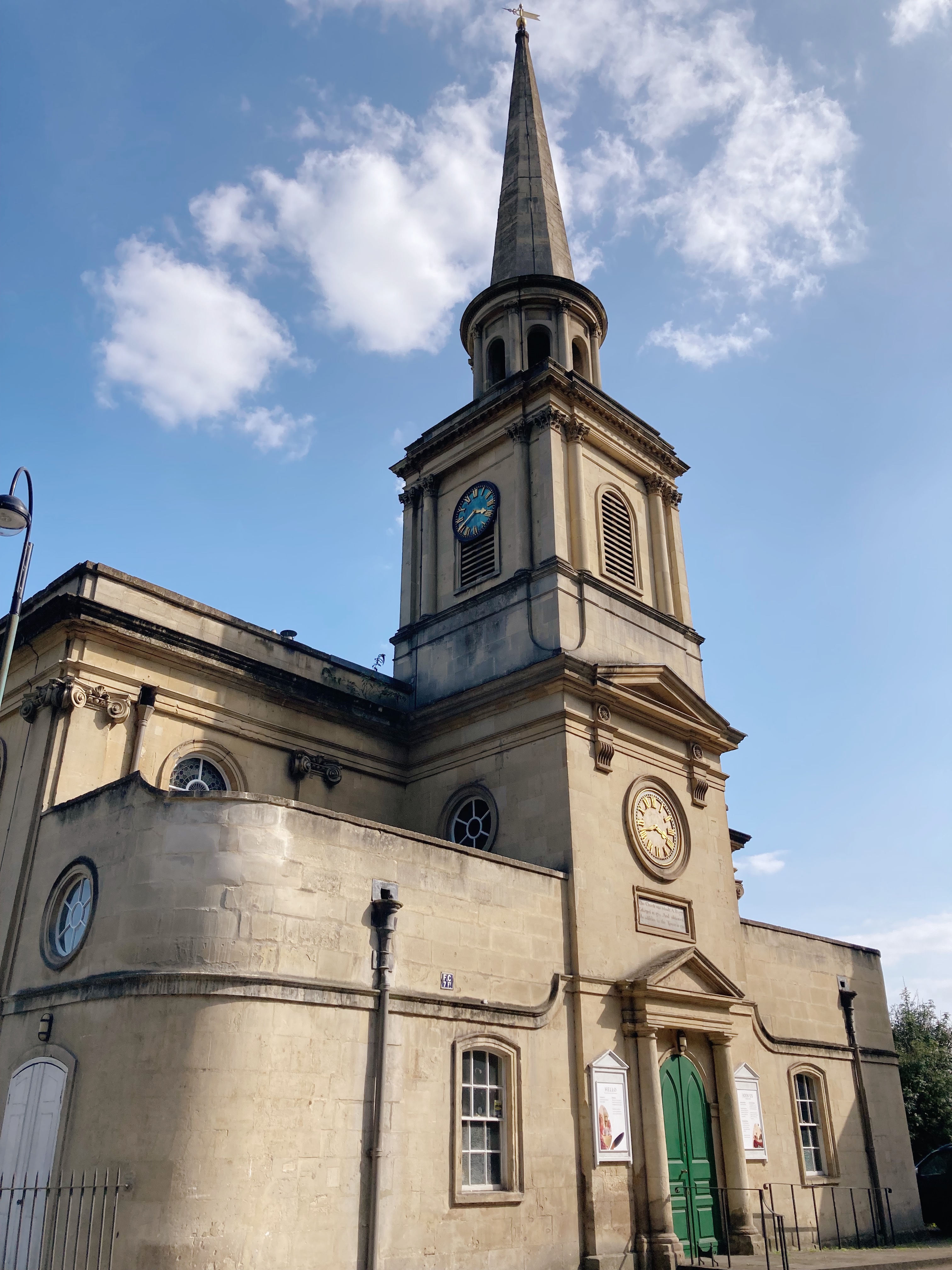
It was during this period when Austen probably got to know Bath best. She would have seen and experienced all the places to go, things to do, people to meet, and ultimately, discovered more than ever how everyone was always watching.
When the great and the good descended upon the city, everybody knew about it, and were watching them at balls, assemblies, the theatre and at the waters. Austen alludes to this visibility in Persuasion:
The Bath paper one morning announced the arrival of the Dowager Viscountess Dalrymple, and her daughter, the Honourable Miss Carteret; and all the comfort of No. —, Camden Place, was swept away for many days; for the Dalrymples (in Anne’s opinion, most unfortunately) were cousins of the Elliots; and the agony was how to introduce themselves properly.
Persuasion, Chapter XVI.
The Austens, when their lease was up at Sydney Place, moved in No. 3 Green Park Buildings, closer to the centre of the city, in 1804.
Quite a lot had happened to Austen during this period: she probably began the eventually unfinished novel The Watsons (which I love for its extensive description of the activity of a public ball); she had spent time at Godmersham Park with her brother Edward; she had visited Lyme Regis, Ramsgate and probably Sidmouth and Colyton, as well as Steventon again; she rejected a marriage proposal from Harris Bigg-Wither, brother of her friends; and, with the help of her favourite brother Henry and his lawyer, sold a manuscript.
In 1803, her manuscript, entitled Susan (reckoned to be an early version of Northanger Abbey), was sold to Benjamin Crosby & Co. They advertised it as forthcoming, but it was never published. Henry would buy it back for her in 1816.
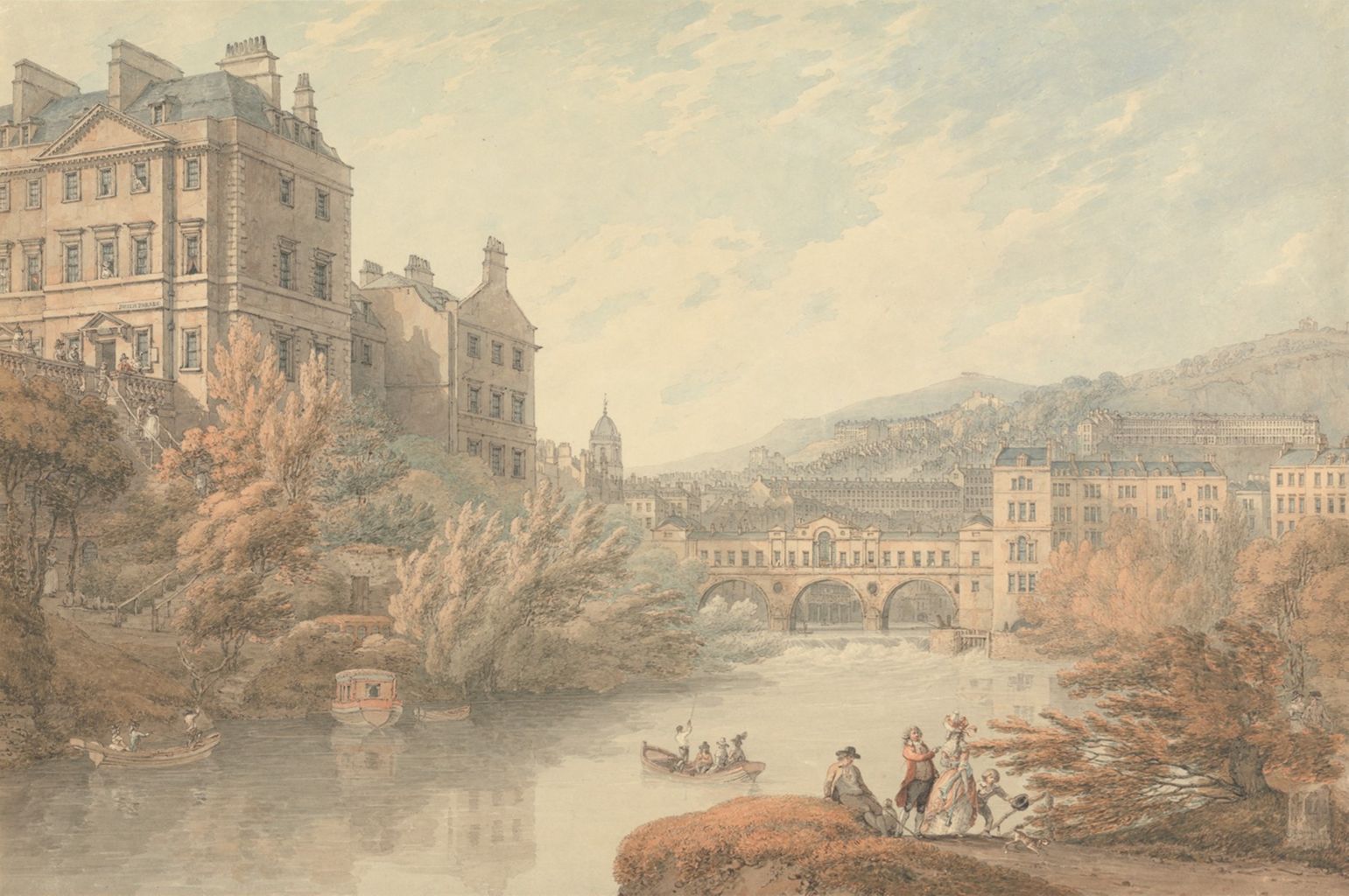
Most significantly, however, was the death of Austen’s father, in January 1805. She wrote this letter to her brother Francis from Green Park Buildings:
Our dear Father has closed his virtuous & happy life, in a death almost as free from suffering as his Children could have wished. … Heavy as is the blow, we can already feel that a thousand comforts remain to us to soften it. Next to that of the consciousness of his worth & constant preparation for another World, is the remembrance of his having suffered, comparatively speaking, nothing.
Not only were the Austens faced with the loss of the Reverend Austen, but with that came reduced circumstances. They moved to a smaller home at No. 25 Gay Street (just a few doors up from the Jane Austen Centre today), before moving to Trim Street in the summer that year. They would eventually leave the city for good in 1806.
What I find really interesting is the contrast between Austen’s presentation of the city in Northanger Abbey and Persuasion. Catherine Morland is full of hope and zeal for this exciting new place, is young and free and everything is new. In Chapter 10, Catherine makes her enthusiasm evident by bursting out, “Oh! Who can ever be tired of Bath?”
Anne Elliot of Persuasion, however, is older and more resigned to the straitened circumstances that befall her family at the story’s opening. Bath is where the Elliots must go to save money whilst they rent out their family seat of Kellynch Hall. Ten years older than Catherine Morland, Anne does not wish to go at all.
But the usual fate of Anne attended her, in having something very opposite from her inclination fixed on. She disliked Bath, and did not think it agreed with her; and Bath was to be her home.
Persuasion, Chapter II.
It could be quite easy to suggest these two contrasting positions of our heroines reflect Austen’s experiences at different ages in the city: her first short trips in her early twenties are full of joy, excitement and promise.
When she left Bath in 1806, she was almost thirty-one, unmarried, and at the mercy of the support of her brothers and their families. (We now know that Edward Austen Knight would give the cottage at Chawton to his two sisters and mother for life in 1809). She was much more of an Anne Elliot than a Catherine Morland. She had endured the loss of her father in the city, had some of her publishing dreams dashed, and perhaps chosen to remain single.
But… I like to think that she remained hopeful about the city, and had some affection for it.
She began revising what would become Northanger Abbey in 1816, keeping Catherine’s wide-eyed wonder, contrasted with her sarcastic and charming suitor Henry Tilney’s comments about the city. Still, Catherine and Henry come together because of their chance meeting in Bath.
Also, Anne Elliot (my favourite Austen heroine after Elizabeth Bennet) receives her happy ending in Bath. It is in Bath that she is reunited with her school friend Mrs Smith, where she discovers the true colours of her cousin Mr Elliot, and where her long-lost romance, Captain Wentworth, declares that he is as still in love with Anne as he was when they were younger. If that is not hopeful, I’m not sure what is.
Dare not say that man forgets sooner than woman, that his love has an earlier death. I have loved none but you. Unjust I may have been, weak and resentful I have been, but never inconstant. You alone have brought me to Bath. For you alone, I think and plan. Have you not seen this? Can you fail to have understood my wishes? I had not waited even these ten days, could I have read your feelings, as I think you must have penetrated mine.
Persuasion, Chapter XXIII.


 Dr. Lizzie Rogers
Leave a comment