

If you ever look at British portraits during the eighteenth century, you will be hard-pressed not to come across one by the illustrious Sir Joshua Reynolds. He was one of the artists to be painted by if you were at the level of society that you wanted your portrait taken, and has gone down in art history with this as his reputation: his paintings, grand and sweeping in style and recalling classical art, are bold and impactful.
Today, February 23rd, is the anniversary of Joshua Reynolds’ death in 1792, so I thought I would explore his life and some of his paintings on my blog today!

Artistic beginnings
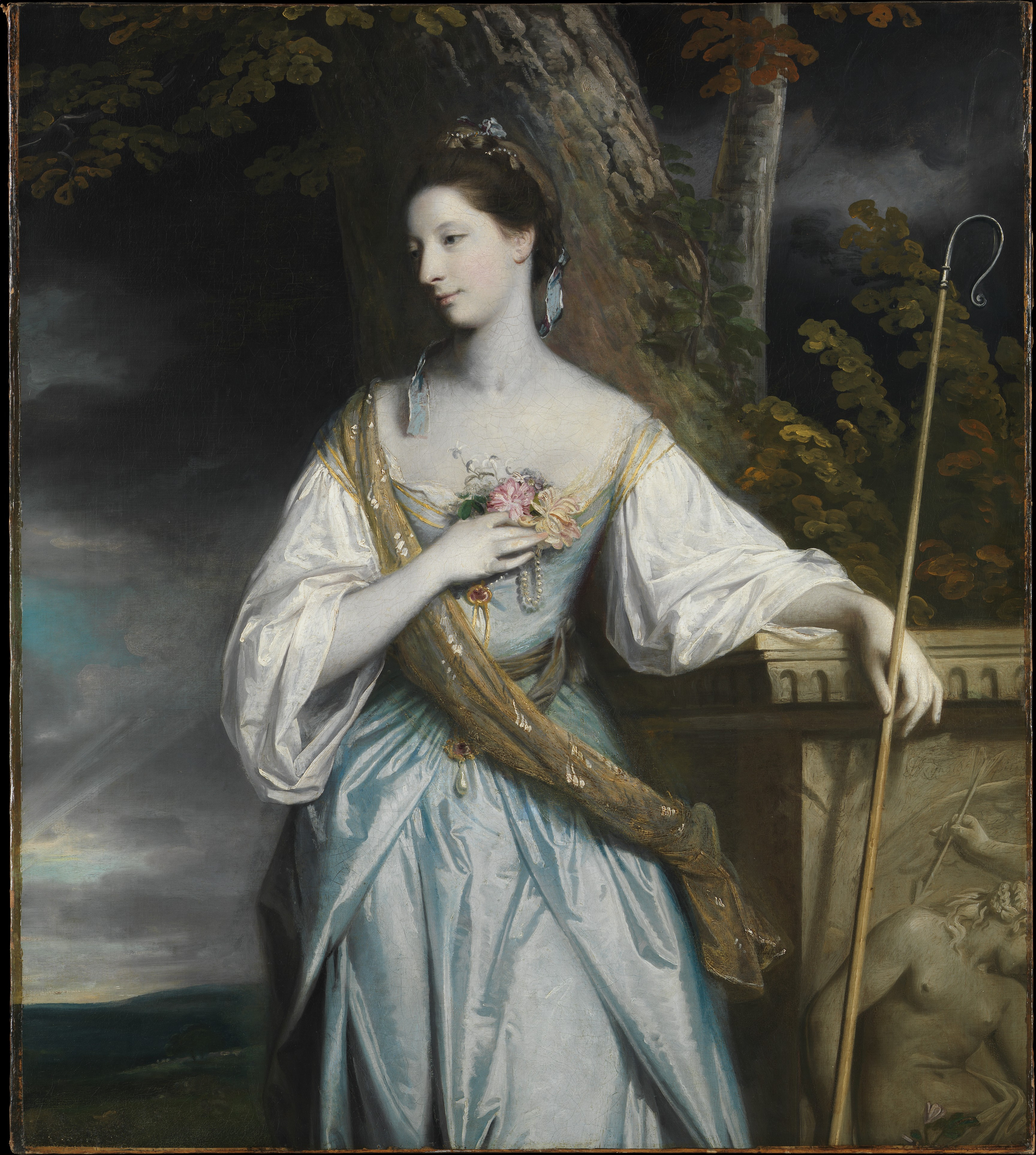
Born on July 16th 1723, Joshua Reynolds had an educated background which pretty much informed the rest of his life’s approach, and was eventually apprenticed in 1740 to Thomas Hudson.
Reynolds wanted to pursue a career as an artist after he read Essay on the Theory of Painting by Jonathan Richardson, and Hudson was the most fashionable portrait painter in London at that time, so a perfect place to learn. Hudson also trained Joseph Wright of Derby.
He remained with Hudson until 1743, before embarking upon independent practice in both London and Devon, where he was originally from.
Travel to Europe
Reynolds then travelled to Europe, invited on an expedition by Commodore Augustus Keppel. Commodore Keppel was a friend of Lord Edgecumbe, who was, in turn, a friend of Reynolds’ father.
It was an important journey for Reynolds: he went on to spend two years in Rome. He studied all of the Old Masters, and particularly admired the work of Raphael and Michelangelo, and travelled back through Europe.

Darling of London
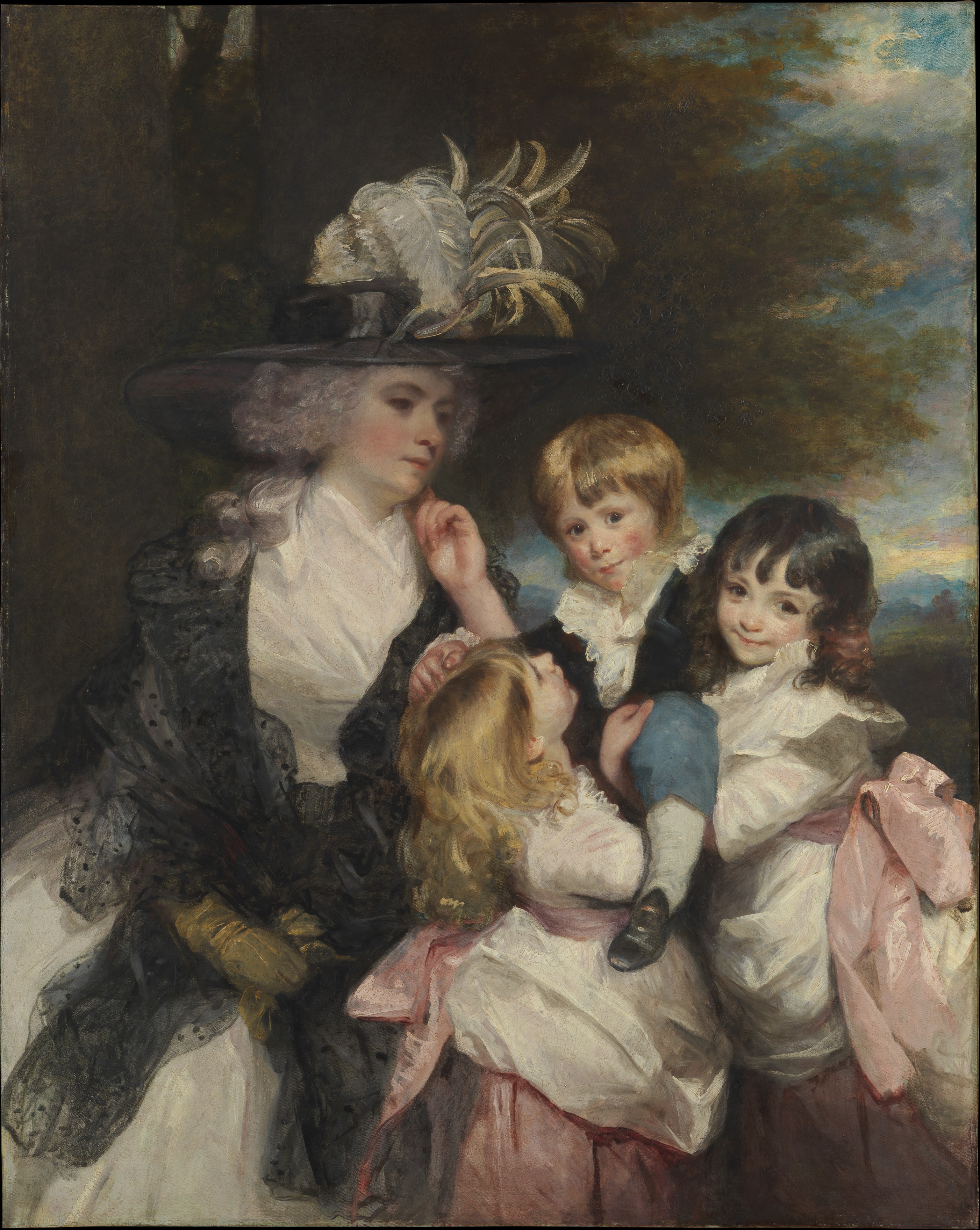
When he came back from Europe, Reynolds set himself up again as an artist in London, and quickly took to being a leading portraitist.
He was so popular that in the year 1759 he had more than 150 people sit for him, and in 1760 was able to purchase a beautiful big house in Leicester Fields.
That house unfortunately no longer exists, but you can find a commemorative plaque on the nearby site at Fanum House in Leicester Square.
His house was run by his sister Frances to begin with, and then by his niece, Mary Palmer. Mary was herself an amateur artist, and later in 1792, after Reynolds’ death, married the 5th Earl of Inchiquin.
Royal Academy
Joshua Reynolds was a key player in founding the Royal Academy of Arts in London.
The petition to form the Royal Academy was signed by thirty-four artists and architects. The Academy would hold a yearly exhibition of work by living artists (which still exists today: the RA Summer Exhibition) and would also found a free art school.
It was unsurprising perhaps that Reynolds was elected President upon the establishment of the RA in 1768: he would remain so for the rest of his life.
The Grand Manner
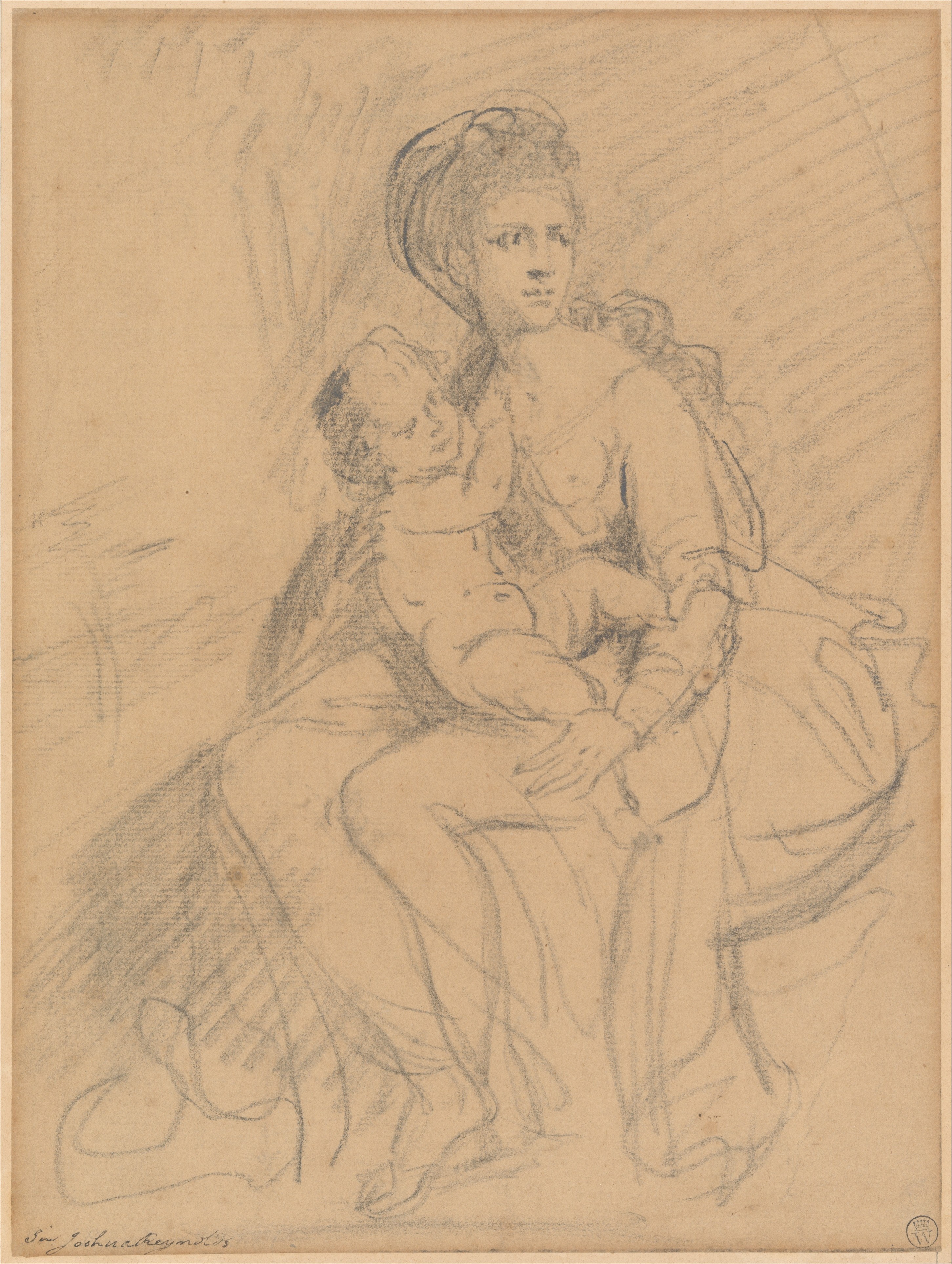
Reynolds’ love of the classical and Renaissance art that he had so admired in Italy found its way into his discussion of Grand Manner painting, explored through his fifteen lectures at the Royal Academy between 1769 and 1790. These lectures became a book, Discourses in Painting, which not only is still in print today, but also had a lasting influence on the art world.
Reynolds’ Grand Manner looked back to classical and Renaissance ideals, which I think can definitely be seen in his work. It is in stark contrast to the soft nature of the portraits of Thomas Gainsborough, Reynolds’ contemporary.
He espoused the idealisation of nature, and actually really rated epic historical scenes: which ironically, he did not get much chance to do, as he was so frequently enlisted as a portrait painter due to his artistic prowess.
Although, in 1782, he was commissioned by Catherine the Great to paint one such historical epic, and he was allowed to choose the subject (perhaps further attesting to his artistic prowess and renown!): he painted The Infant Hercules.

Techniques
Something to look out for in Reynolds’ painting that always fascinates me: have you noticed that the white skin tones tend to look really faded, more ghostly than trying to achieve a porcelain skin effect? That’s because the red pigment in the carmine he used is unstable. It even began to fade in his own lifetime!

Death
Although Reynolds was partially deaf for much of his life because of a bad cold he had sustained during Rome (sometimes pictures of him display him carrying his ear trumpet), he was quite healthy until the final decade of his life. In 1782 he had a stroke, and in 1789 he went blind in his left eye.
He died at home in that house on Leicester Fields on this day in history – 23rd February 1792 – and his body lay in state at the Royal Academy before he was buried at St Paul’s Cathedral. Upon his death, Edmund Burke said that Joshua Reynolds was “the first Englishman who added the praise of the elegant arts to the other glories of his country”.


 Dr. Lizzie Rogers
Leave a reply to Calmgrove Cancel reply