
I don’t know about you, but one of my favourite things is to go out for tea (with croissants in the morning, and cake in the afternoon, if possible!), which is a hobby we share with our eighteenth- and nineteenth-century ancestors.
One of the most famous tea shops in London during this time was called Gunter’s. You have probably heard of it before: it is frequently referenced in Regency romance novels in particular, and has made its way into Bridgerton. Unfortunately, it closed in 1956, so we can’t visit now, but we can recapture its very sweet history…
Originally a sweet shop called the Pot and Pineapple in the highly fashionable location of Berkley Square (highly fashionable location), it was first opened by an Italian pastry chef called Domenico Negri. Pineapple, because that was the symbol of both luxury and confectionery, as they were so expensive to import.
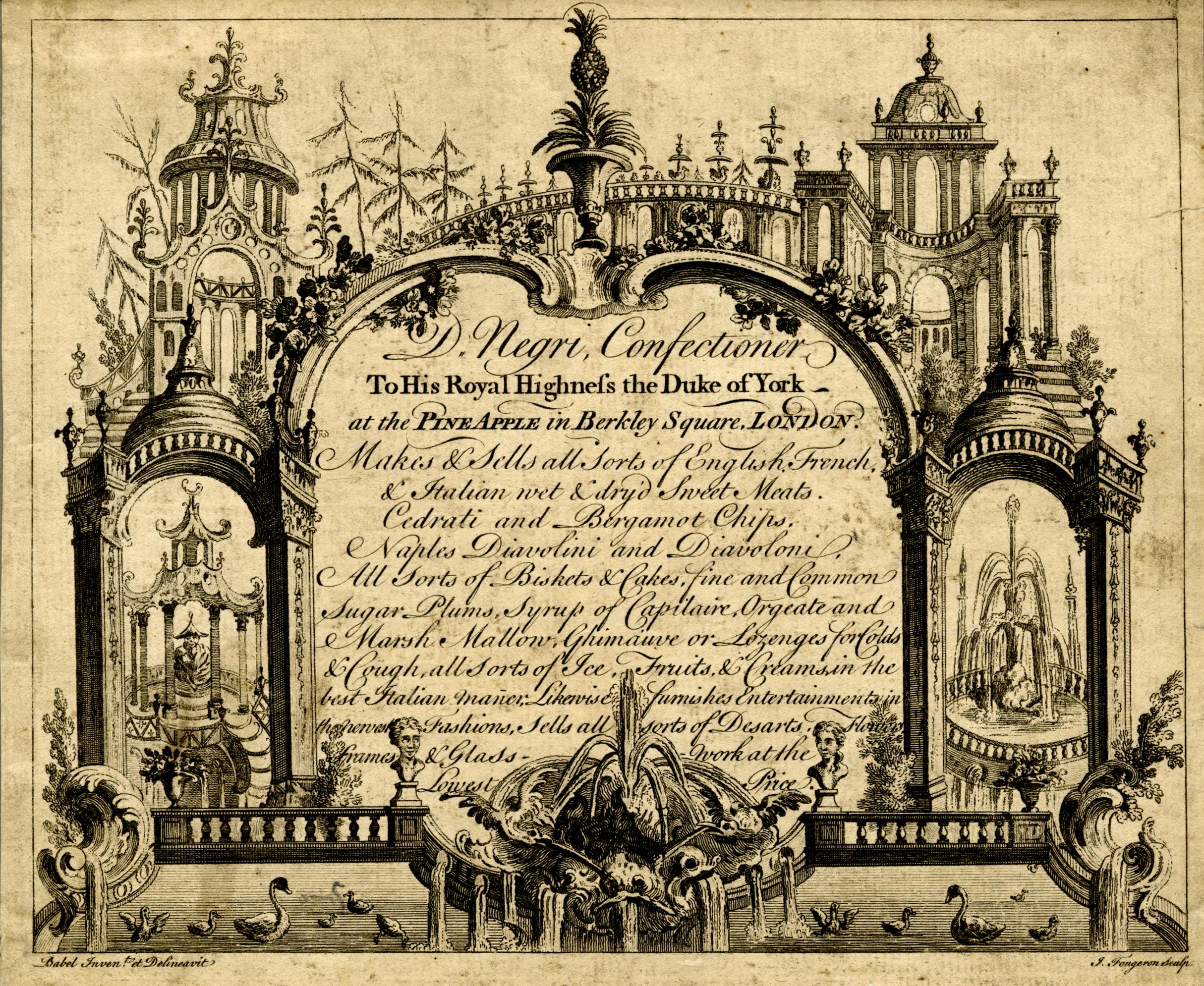
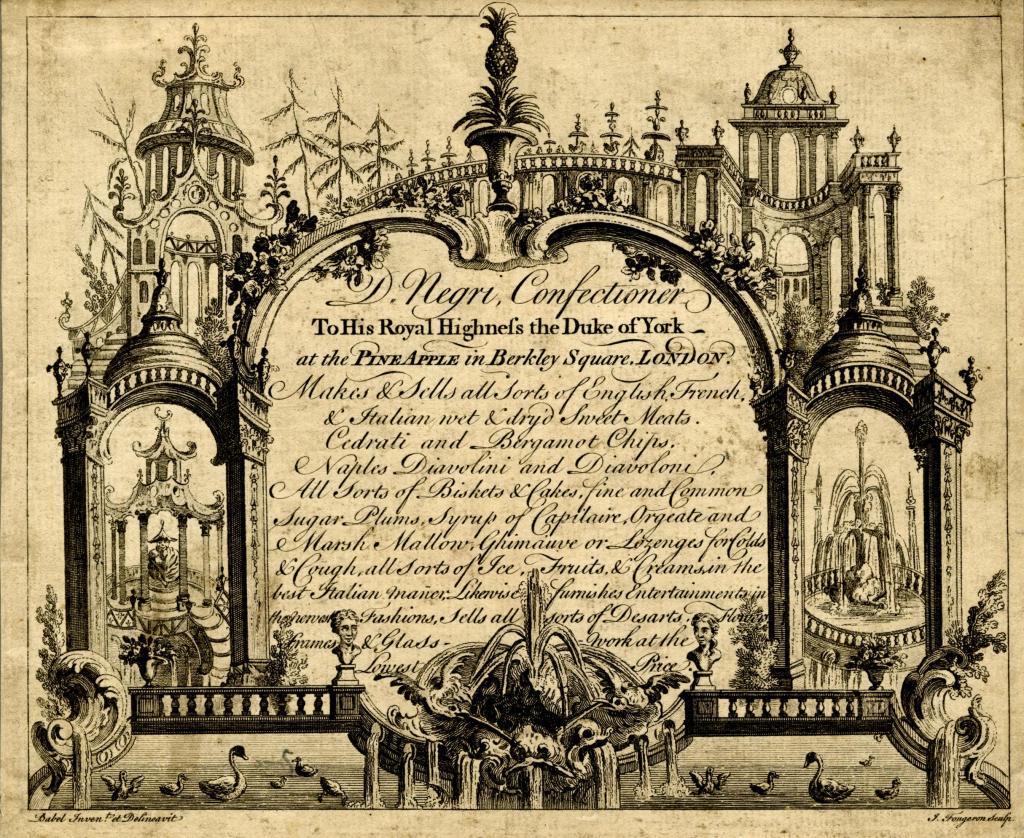
This is his trade card! (I love trade cards, and the British Museum have a HUGE collection of them you can browse online) This one is particularly gorgeous in its design, and dates to a little later than the shop’s first opening, between 1760-67, by which time Negri had become supplier to the Duke of York. At this time, the Duke of York (and Albany) was Prince Edward, younger brother of George III.
Here we can see exactly what Negri sold: wet and dry sweetmeats, fruits, cakes, syrups, “all sorts of English, French and Italian” items, even lozenges for colds and coughs, and – the best bit – “ices, fruits and creams in the best Italian manner”. Delicious!
As a little food history note, ice cream, or ices, became particularly popular during eighteenth and early nineteenth centuries. If you have ever visited a British country house, you may well have seen an ice house in their grounds: they often look like ominous caves, where ice would be brought in the winter and kept cool to last throughout the year.

Ices could be made of interesting flavours, from parmesan and gruyère cheese, to herbs and spices finding their way into ices frozen in fun shaped moulds, as well as floral flavours. I think the floral options would have been my favourite, as I (strangely) love rose or lavender ice cream.
Now, how did the Pot and Pineapple become Gunter’s?
In the 1770s, Negri took on a Welsh business partner, James Gunter, who eventually became sole owner (it’s not clear how or why, but may be because Negri retired or died). He changed the name in 1799 to Gunter’s Tea Shop. It became an incredibly popular stop in the afternoons for the well-to-do of nineteenth-century London, after a promenade or carriage drive. You could even sit out in Berkley Square on nice days with your treats from the shop.
You can hear about Gunter’s in my Instagram reel below:
 Dr. Lizzie Rogers
Leave a comment