
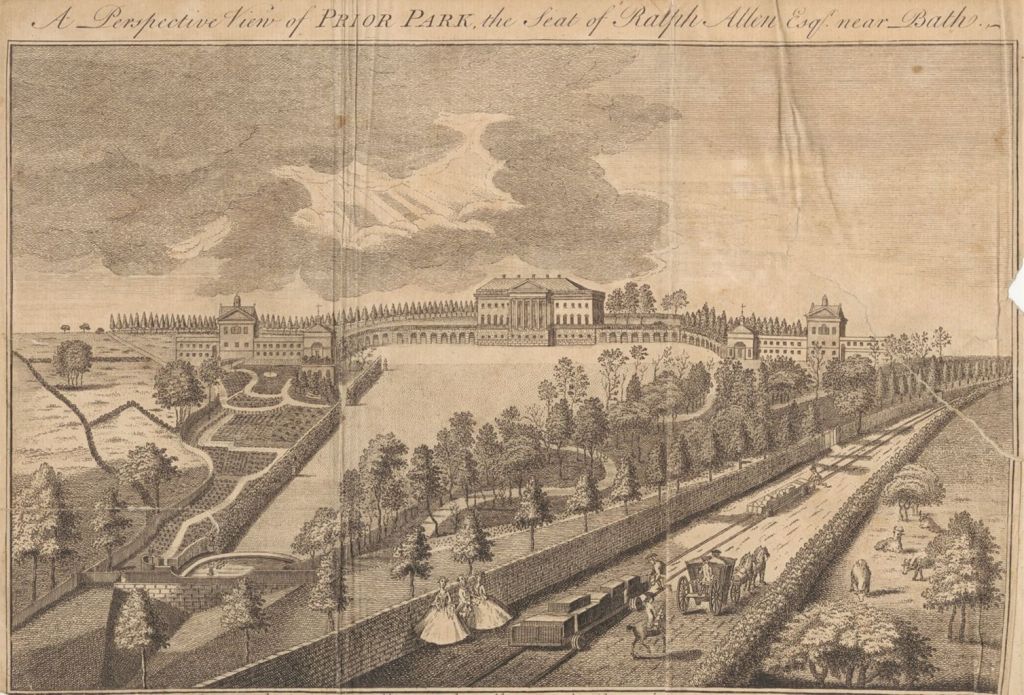
Print made by unknown artist, A Perspective View of Prior Park, the Seat of Ralph Allen Esq. near Bath, undated, Yale Center for British Art; Yale University Art Gallery Collection, B1998.14.180.
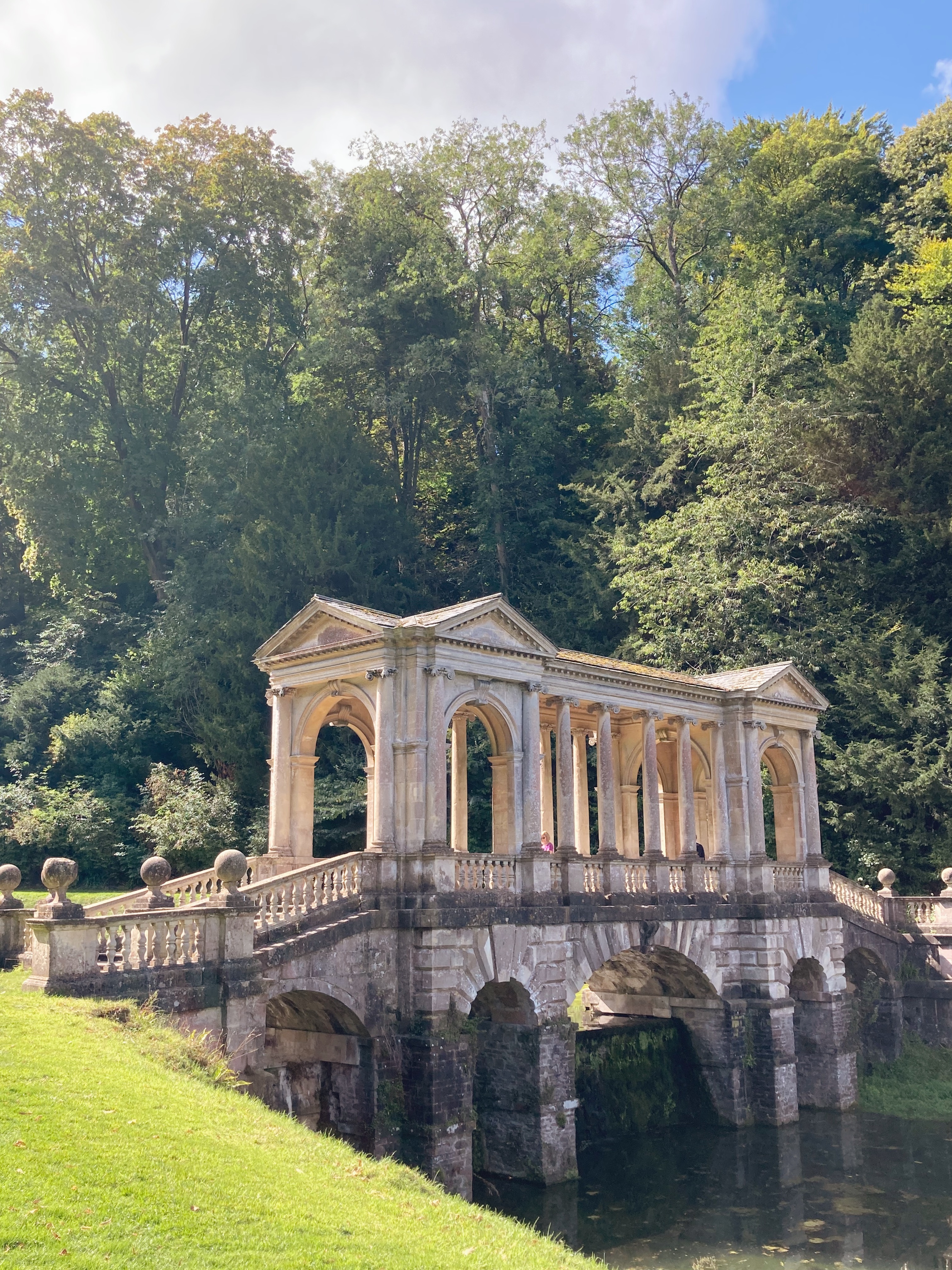
Welcome to Prior Park, a beautiful garden overlooking the Georgian city of Bath that is home to this stunning Palladian bridge: one of only four of this design in the world.
Prior Park was the brainchild of Ralph Allen, a businessman who first made his money in improving the postal service, then invested in stone mines around Bath and building a railway to transport said stone to the city, making famous and fashionable that beautiful honey-coloured stone.
Building a mansion at Prior Park was really his crowning achievement: it showed his upward rise from humble beginnings, as well as that gorgeous stone. The architect John Wood – famous also for Queen Square and the Circus in Bath, amongst other buildings – was responsible for the mansion. Begun in 1730, it took eleven years to build, and is now home to a school.
Although the mansion is imposing, I think the most beautiful part of Allen’s legacy is the garden. Work on this begun in 1734, and initially followed a very formal design. Allen was friends with Alexander Pope, a poet and garden designer, who offered advice on Allen’s project.
Pope had laid out his own garden at his villa in Twickenham. Fascinated by the classics, and ancient Roman gardens that looked to the beauty of nature and eschewed too much formality, he loved areas of wilderness, statues and grottos. Pope would advise Henrietta Howard (an important intellectual and mistress of George II) at Marble Hill House.

Pope’s ideas about garden design were incredibly fashionable: the seventeenth century had been a time of all formal designs, but with a love of classical architecture and literature in the eighteenth century (they were obsessed with the ancients!) came a new love for natural, sweeping, landscape gardens.
You might read that and think… so… was Capability Brown involved here?
Capability Brown, after all, is famous for this kind of English landscape garden that celebrated the natural landscape.
Well, there is a mystery at Prior Park surrounding Capability Brown. In the 1760s, the garden took on more of this English landscape style, changing some of the more formal aspects.
There are no records left behind that Brown ever visited, consulted, or made plans for Allen, though he was working on estates in this area of the country during this period.
But, when Allen died in 1764, there is a record that he owed Brown £60. So, whilst Brown was probably involved somewhere along the line, the person we know for definite advised and supported Allen’s garden was Alexander Pope.
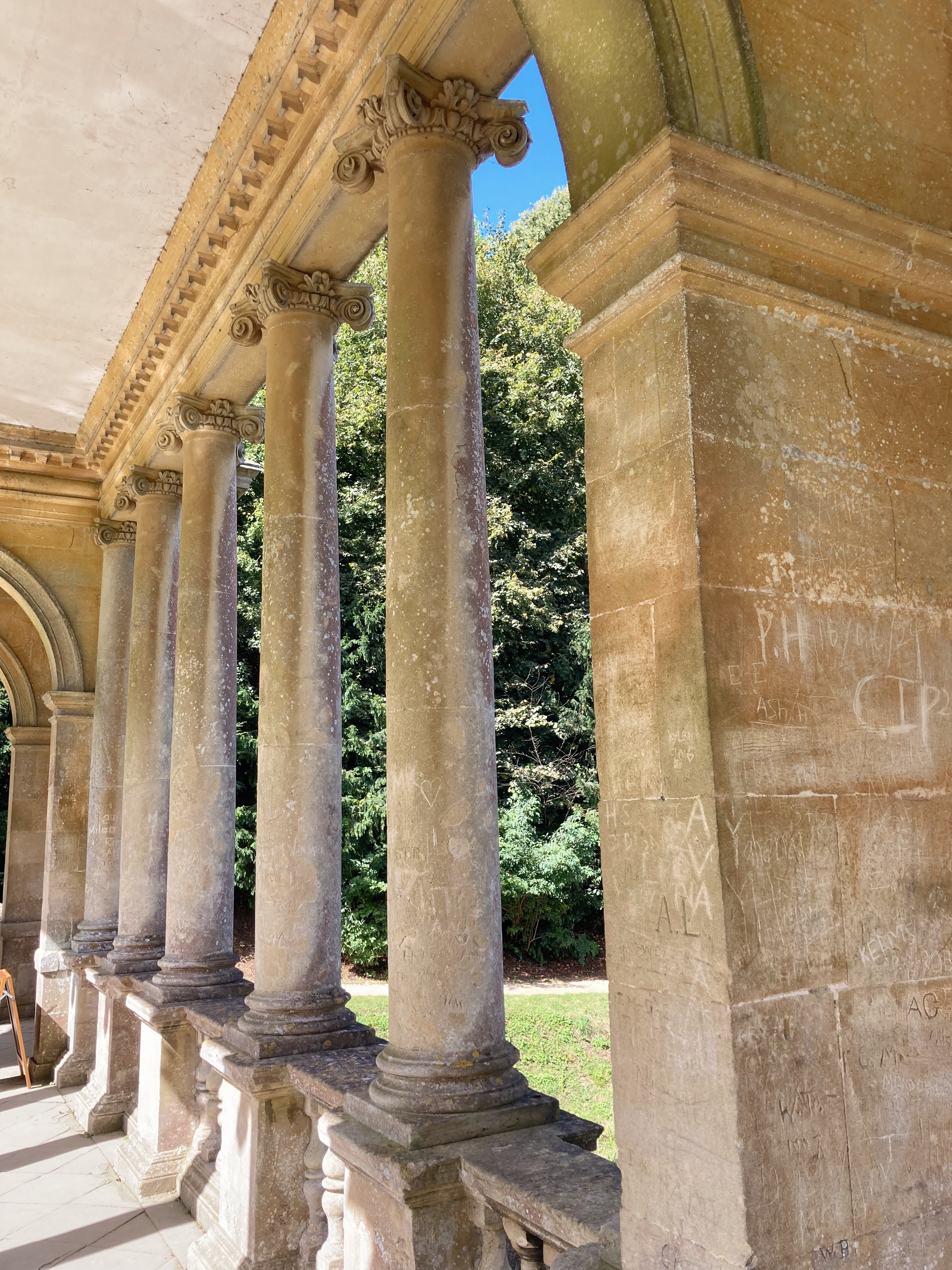
One of the biggest nods to a love of the classical era is the imposing and, honestly, gorgeous Palladian Bridge, which was built by the architect Richard Jones in 1755.
It is called ‘Palladian’ for the Renaissance Venetian architect Andrea Palladio whose love of ancient Roman and Greek architecture led to the widespread popularisation of these designs: he was most famous for his influence on country houses. (Prior Park mansion is, itself, a Palladian house!)
As I mentioned earlier, there are only four bridges like this left in the world. You might recognise this design from a certain period drama called Bridgerton: that one is at Wilton House, near Salisbury. You can also find another at Stowe.
I think this was my favourite part of the garden: I love this kind of neoclassical architecture and you can certainly imagine the great and the good of eighteenth century Bath promenading through Prior Park and across the bridge during the heyday of this Georgian city.
Though Prior Park became emblematic of Allen’s rise, when he died in 1764, and his wife Elizabeth in 1766, they did not have an heir to inherit. The park was owned by numerous different people, and the garden became overgrown. In 1828, Bishop Baines bought it and turned the mansion into a school.
The garden became a National Trust property in 1993, and the Trust have been restoring it ever since.


 Dr. Lizzie Rogers
Leave a reply to Calmgrove Cancel reply